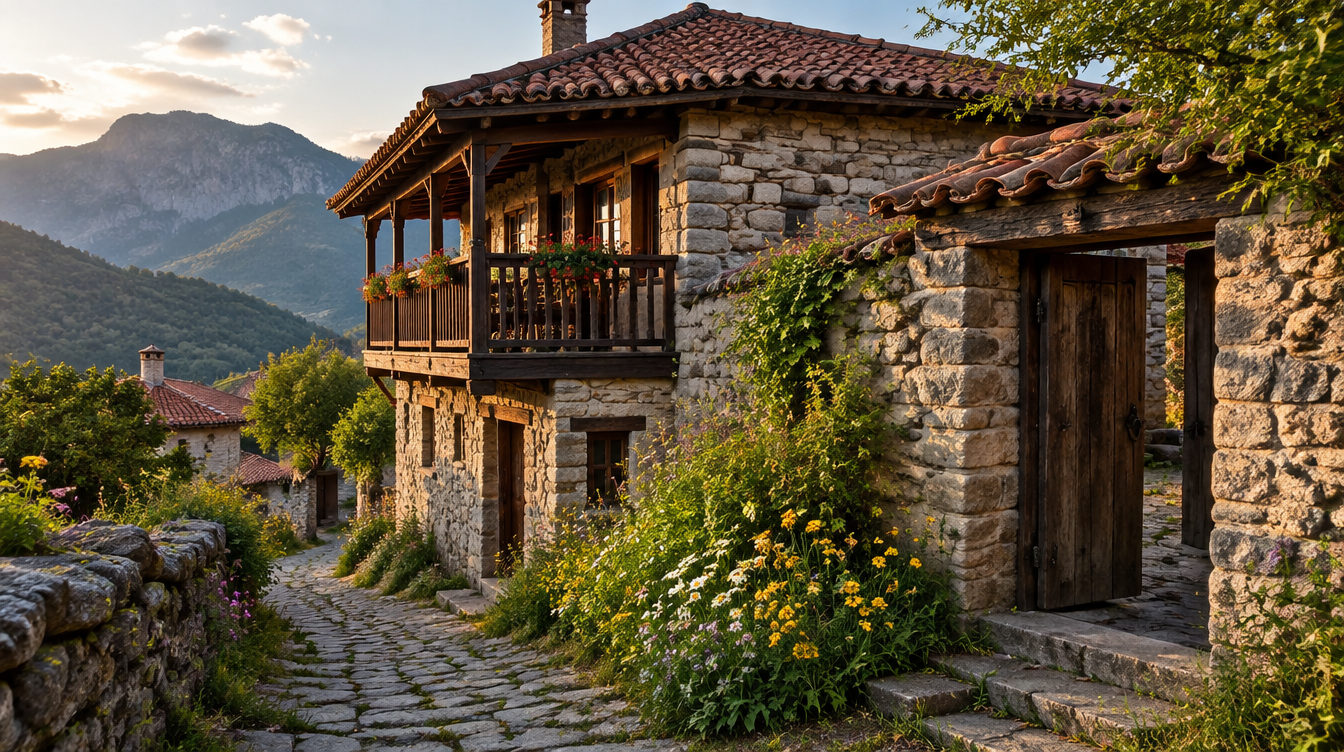
How to Trace Your Macedonian Village: A Guide for Australian Families
To trace your Macedonian village, start with your oldest relatives. Then find your family’s first Australian records, such as naturalisation files at the National Archives of Australia. These often name the town or village of birth. Once you have a village name, check whether it has changed, then look for church and civil records in Macedonia. Most families can find their village with a few weeks of patient work.
Many second and third generation Macedonian-Australians know only that Dedo came “from near Bitola” or “from Lerin”. This guide takes you from that half-remembered name to a real place on a map.
Step 1: Talk to the oldest relatives first
Older family members are the best source you have, and time matters. Bring a notebook or record the chat on your phone, with their permission. Ask for spellings and write them in Cyrillic too if they can.
Good questions to ask:
- What was the name of the village? Did it have another name?
- Which town or district was it near? Which mountain, lake or river?
- What was the family called in the village? Did the clan have a nickname?
- What were your parents’ and grandparents’ full names?
- Which church was in the village, and which saint’s day did the village celebrate?
- When did you leave, which ship or plane did you come on, and where did you land?
- Do you still have old passports, letters, photos or postcards?
Old photos are gold. The back of a photo often has a village name, a date or a photographer’s town stamped on it.
Step 2: Gather the Australian records
Australian records are often the easiest place to find a village name. They are in English, they are well indexed, and many are free to view.
National Archives of Australia
The National Archives of Australia (NAA) holds most immigration records. You search them online through its catalogue, called RecordSearch. Try the “Name Search” option and choose immigration and naturalisation records.
- Naturalisation records (from 1904): case files often give date and place of birth, parents’ names and arrival details.
- Passenger lists: arrivals by sea or air, mostly from 1924. They list name, age, occupation and nationality.
- Migrant selection documents (from 1945): for assisted migrants. Some include photos and health checks.
- Alien registration forms: made during both world wars for residents who were not naturalised. These matter for the families who came in the 1920s and 30s.
Some files are already digitised and can be read online. Others can be requested. Access rules and copy fees change, so check the NAA website before you order. Last checked: October 2026.
Births, deaths and marriages
Each state and territory has its own Births, Deaths and Marriages registry. A death certificate usually shows place of birth. A marriage certificate often names both sets of parents. Rules on who can order a certificate differ between states, so check your state’s registry website.
Church records here
Many families married or baptised children in a Macedonian Orthodox parish in Australia. Parish books may record the village of birth of the parents or godparents. Contact the parish office politely and be patient, as many are run by volunteers. Find your parish on our churches page.
Village associations are another good lead. Many villages have, or once had, a club in Melbourne, Sydney or Perth. Older members often know exactly which families came from where.
Step 3: Records in Macedonia
Once you have a village name, you can look in Macedonia itself.
- State Archives of the Republic of Macedonia (Државен архив, arhiv.gov.mk). Founded in 1946, it is based in Skopje and has regional units in Bitola, Kumanovo, Ohrid, Prilep, Skopje, Strumica, Tetovo, Veles and Štip. Write to the unit nearest your village.
- Civil registry books (матични книги). In Macedonia these are kept by the Directorate for Keeping Registry Books (Управа за водење на матичните книги). They record births, marriages and deaths.
- Church registers. For older generations, the village church may have kept baptism and marriage books. Ask the local parish priest or the diocese.
Expect to write in Macedonian. A relative or a friend from your parish can help. Families from villages now in Greece or Bulgaria will need to contact the archives and municipal offices of those countries instead.
Step 4: Check whether the village was renamed
This is where many searches get stuck. Many village names have changed over the last hundred years.
In Greece, place names were changed by law many times between 1913 and 1996. According to a count cited on Wikipedia, there were 1,805 renamings in the Greek region of Macedonia alone. So the village your grandmother calls by one name may appear on today’s maps under a different name.
How to find both names:
- Write down every version the family uses, in Cyrillic and Latin letters.
- Search the “Name Changes of Settlements in Greece” database, run by Greece’s National Hellenic Research Foundation. It lists old and new names and the year of change.
- Look up the village on Wikipedia. Village articles often list former names.
- Ask older people from the same district at your parish or club.
Villages in the Republic of Macedonia have also changed. Some were merged, some emptied, and some have new spellings. Note every version you find.
Step 5: Use our heritage map
The macedon.org.au heritage map lists more than 2,600 heritage places. That includes about 1,970 churches and 267 monasteries, mostly in the Republic of Macedonia. Search your village name. If the village church is on the map, you can see its exact location and often a photo. That may be the church where your great-grandparents were married.
If you are planning a visit, our guide to the monasteries of Macedonia covers famous sites near many villages.
Step 6: DNA tests, with care
Consumer DNA tests can connect you with cousins in Macedonia, Australia, Canada or the US. That can be a real breakthrough. But be careful:
- “Ethnicity estimates” are rough guesses. They cannot name your village.
- The useful part is the list of matched relatives, and only if they have also tested.
- Read the privacy terms. Think about who can see your data, and talk to family before sharing results.
Step 7: Visit in person
Nothing beats standing in the village. Go with a printed family tree, old photos and the names of the families you are looking for. Visit the church and the cemetery, as headstones carry names and dates. Ask at the village café; older locals often remember who left for Australia. Our guide to visiting Macedonia from Australia covers the practical side.
Your village-tracing checklist
| Step | What to look for | Where |
|---|---|---|
| Talk to relatives | Village name, old name, family nickname, parents’ names | Your family |
| Family papers | Old passports, letters, photos | Home, cupboards, suitcases |
| Naturalisation and arrival files | Place of birth, arrival date, ship | NAA RecordSearch |
| Certificates | Birthplace, parents’ names | State Births, Deaths and Marriages |
| Parish books | Village of parents or godparents | Macedonian parishes in Australia |
| Name changes | Old and new village names | Greek name-change database, Wikipedia |
| Records in Macedonia | Births, marriages, deaths | State Archives, civil registry, village church |
| The village church | Location, photo | Our heritage map |
| Living cousins | Matches with family trees | DNA tests (with care) |
Found your village? Tell us about it. We would love to hear which tips worked for your family, and we may add your village’s church to the map. You can also learn what your family name means in our guide to Macedonian surnames.
Frequently asked questions
How do I find out which village my grandparents came from?
Ask older relatives first, then search their naturalisation file on NAA RecordSearch. These files often name the place of birth.
Are Australian naturalisation records free to view?
Searching RecordSearch is free, and some files are already digitised online. Others can be requested. Check the NAA website for current fees.
Why can’t I find my village on a map?
It may have been renamed. Many villages in northern Greece were given new names between 1913 and 1996. A Greek name-change database lists old and new names.
Can a DNA test tell me my village?
No. It can only link you with relatives who have also tested. Their family trees may then point to the village.
Where are old records kept in Macedonia?
The State Archives in Skopje and its regional units, the civil registry office, and local church registers.
Further reading: NAA RecordSearch · Geographical name changes in Greece (Wikipedia)
Прочитајте на македонски: Како да го најдете селото на вашите предци